
Welcome to the AI First Web — Your Internet, but Smarter (and More Autonomous)
A Quick Overview
The AI First Web transforms the internet’s landscape. Instead of people directly accessing websites, AI agents take the lead. These intelligent helpers search, curate, and personalize content before you even see a single page. For businesses, this means your website must communicate effectively with AI, not just humans. It’s time to adapt your digital strategy for AI interaction or risk falling behind in 2025 and beyond.
What Exactly Is the AI First Web?
Remember when “mobile-first” was the big deal? Now the spotlight is on “AI First.” This goes beyond a buzzword — it’s reshaping how the internet functions.
Historically, humans were the primary users of the web: typing queries, clicking links, consuming content. AI operated quietly in the background, offering recommendations or answering chatbot questions.
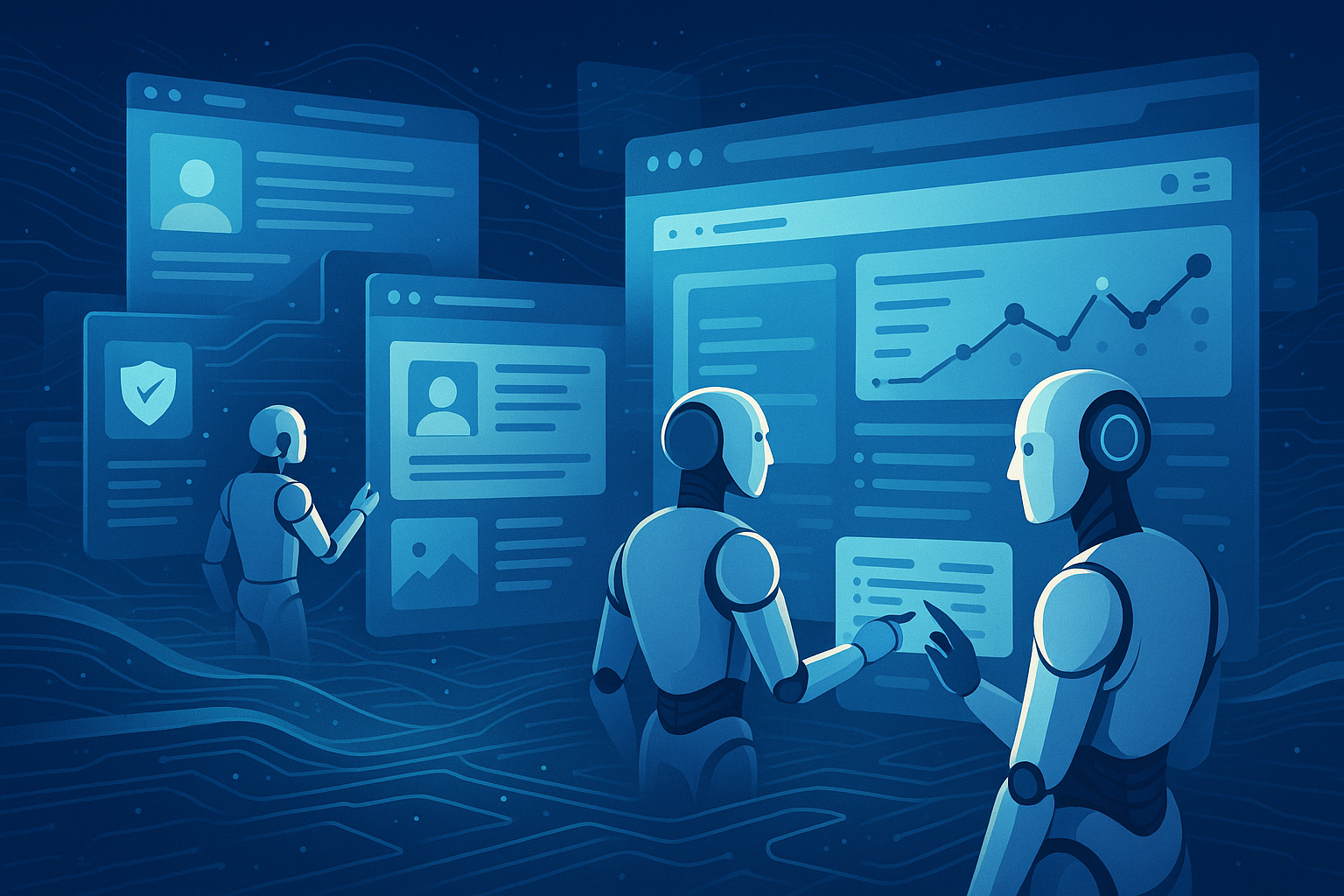
Today, AI takes center stage as your web visitor. Imagine your website serves AI-powered browsers like Fellou or Browserbase, sending autonomous agents that navigate your site independently. These agents collect data, automate tasks, and determine relevance—all before any human lands on your page.
Your website isn’t broken; it simply hasn’t been optimized for AI interaction yet.
Why is this important? AI visitors process content differently than humans. They scan and analyze with AI cognition, demanding your site be optimized for their unique behaviors. This fundamental shift impacts web design and the way you craft your brand story.
Why You Should Care
AI isn’t just a tech novelty anymore. The AI First Web is altering business landscapes everywhere:
- Advanced Personalization: AI adapts content in real time based on user mood, context, and preferences, moving beyond outdated cookie data.
- Automation at Scale: AI agents handle repetitive tasks, data gathering, and analysis efficiently—without downtime or errors.
- New SEO Paradigms: Traditional SEO falls short as AI dynamically reads, rewrites, and ranks content. Your SEO strategy must serve AI readers as well as humans.
- Evolving Business Models: AI isn’t simply an add-on—it’s integral to product design, customer journeys, and organizational decision-making.
Treat AI as your primary customer and collaborator, and redesign your approach accordingly.
What AI First Web Looks Like Every Day
- AI as Digital Gatekeeper: AI filters and prioritizes information before it reaches users, acting like a highly efficient digital receptionist.
- AI-Powered Browsing: Autonomous agents roam the internet, multitasking, collecting data, and making decisions without human input.
- AI-First Development: Websites become intelligent applications, adapting dynamically through ongoing AI insights.
- Real-Time Personalization & Automation: User experiences shift on the fly, anticipating needs and automating routine processes.
- SEO Evolution: Optimize content for AI interpretation and potential AI-generated summaries or rewrites.
- Conversational, Adaptive UIs: Interfaces engage both AI and humans, adjusting seamlessly to preferences and context.
- AI-Friendly Infrastructure: Scalable, secure servers handle streaming data, AI computations, and rapid model updates.
The Bottom Line for Smart Businesses
The AI First Web is no longer on the horizon—it’s here. Forward-thinking companies:
- Integrate AI deeply across technology stacks and workflows.
- Tailor content strategies for AI audiences alongside human readers.
- Develop dynamic, conversational user interfaces.
- Invest in robust AI infrastructure that supports continuous learning and privacy.
- Prioritize ethical AI use and data protection to maintain trust.
Remember this for your next meeting:
“AI agents are our new primary customers. We must build for them or risk becoming invisible.”
AI First Web Cheat Sheet
- AI processes and filters content ahead of human consumption.
- Autonomous AI agents browse websites independently.
- Digital assets require AI-optimized frontends and backends.
- Personalization and automation rely on real-time AI insights.
- SEO strategies now focus on AI understanding and dynamic content ranking.
- AI-first design emphasizes adaptive, conversational interfaces.
- Scalable, secure AI infrastructure is essential.
- Ethics and privacy form the foundation of AI deployment.
- Continuous data feedback loops enhance AI personalization.
- Start small but think big: embed AI, optimize content, and build adaptive experiences.
FAQs
Q: What is the AI First Web?
A: It’s a web ecosystem where AI leads discovery, interpretation, and personalization of content for humans.
Q: How do AI-powered browsers work?
A: They deploy AI agents that autonomously navigate, search, and interact with web content without human clicks.
Q: Can I just add AI to my existing website?
A: No. AI First Web requires ground-up redesign with AI embedded into frontend and backend systems.
Q: Does this change SEO?
A: Yes. SEO must target AI reading, with content optimized for AI-driven ranking and summarization.
Q: Which industries does this affect?
A: All— from e-commerce and media to healthcare and enterprise software benefit from AI-driven personalization and automation.
Q: How do I begin?
A: Integrate AI capabilities early, redefine content for AI agents, design adaptive interfaces, and build AI-first infrastructure.
The AI First Web is more than a technology trend—it’s the internet’s next evolution. Embrace it today to stay relevant and lead in a smarter, faster, AI-powered digital era.