
The Rundown: What AI Technologies Mean for Business in 2025 (Without the Tech Jargon)
TL;DR
AI is no longer just sci-fi — in 2025, it’s a true game changer. From chatty AI assistants to smart robots handling invoices, businesses leveraging generative AI, automation, and advanced analytics are sprinting ahead. But here’s the twist: less than 5% of companies have fully integrated AI into everyday operations. The rest are cautious or stuck, widening the gap between leaders and laggards. Regulations are easing to encourage innovation but also push businesses to act responsibly. Bottom line? To win tomorrow, invest in quality data, reskill your people, and make AI your teammate.Why 2025 Is AI’s Year to Shine for Business
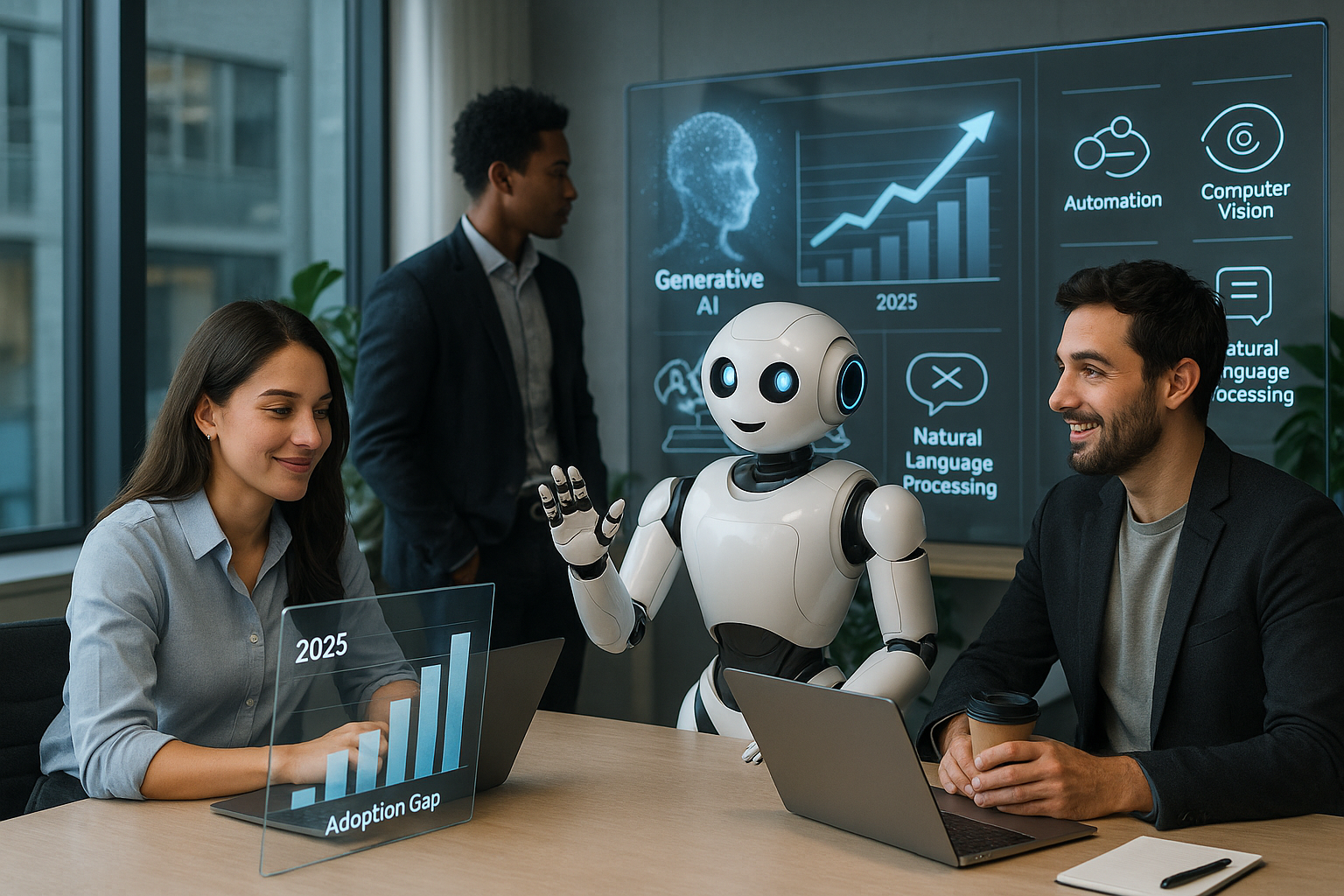
Artificial intelligence used to be “that complicated tech only geeks used.” Now, it drives transformation across industries. Thanks to robust cloud platforms and smarter AI models, generative AI can write text, create images, and design products instantly — your super-creative colleague that never sleeps. Despite the hype, only about 5% of companies are fully committed to AI. The rest are hesitant or overwhelmed. This “GenAI divide” lets early adopters thrive with smarter marketing, faster innovation, and better customer experiences.What’s Driving AI Today:
- Generative AI: Powers personalized marketing content, rapid product ideas, and brainstorming. Imagine an AI content factory creating emails, blogs, or video scripts while your team focuses on strategy.
- Automation & RPA: Robots handling invoice payments? Almost. Robotic process automation handles tedious tasks like data entry and claims processing, freeing humans for higher-value work.
- Advanced Analytics: No more guesswork. AI analyzes huge data sets in real time to predict trends, optimize supply chains, and personalize offers.
- Computer Vision: Beyond surveillance, AI-powered vision analyzes shopper behavior, checks product quality, and pilots delivery vehicles autonomously.
- Natural Language Processing (NLP): Your 24/7 chatbot concierge understands customers, mines insights from dense reports, and makes data interaction as easy as chatting with a coworker.
Industry Spotlights
- Healthcare: Customized care, faster drug discovery, and clinical staff support.
- Finance: Smarter fraud detection, risk modeling, and personalized wealth advice.
- Manufacturing, Telecom, Logistics: Predictive maintenance, digital twins, and AI automation keep operations smooth.
Navigating the Regulatory Tightrope
Rules are lighter to encourage innovation but clear on transparency and bias. Responsible AI builds trust customers and regulators demand.AI as a Co-Worker
Forget robots replacing people. AI empowers employees as superagents, boosting decision-making and automating grunt work. Upskilling and culture shifts are vital.What Leaders Need to Know
AI success depends on trusted data and embedding AI into workflows—not just adding it on. Companies doing this pull decisively ahead. AI is now core to business models, customer experience, and operational excellence.10 AI Trends Business Leaders Should Watch in 2025
- Generative AI sparks personalized innovation.
- Robotic Process Automation accelerates routine work.
- Advanced analytics reveal real-time trends.
- Computer vision expands usage from traffic to driverless trucks.
- NLP boosts customer engagement anytime, anywhere.
- AI creates “superagency” with employees.
- Flexible regulations fuel responsible innovation.
- Industry AI use cases grow—healthcare, finance, manufacturing.
- Cloud and APIs make AI accessible and affordable.
- The AI adoption gap widens—leaders pull ahead.
FAQ: Your Quick AI Guide for 2025
Q: Which AI tech moves the needle? Generative AI, robotic process automation, advanced analytics, computer vision, and NLP. Q: How does generative AI change marketing? It automates personalized content and speeds product idea creation — like turbocharging your creative team. Q: Is AI stealing jobs? No. AI automates tedious tasks, freeing people for meaningful work. Q: Who leads in AI adoption? Healthcare, finance, retail, and logistics with targeted AI boosting efficiency and care. Q: What about AI regulations? Easier rules encourage innovation, with an emphasis on fairness, transparency, and privacy. Q: Why is advanced analytics a game changer? It enables immediate, data-driven decisions—from demand prediction to customized offers. Q: Why care about the AI adoption gap? Fast adopters seize big market advantages. Q: How do cloud platforms impact AI? They make AI affordable and scalable without specialized expertise. Q: What’s “superagency” at work? Employees equipped with AI tools to innovate and work smarter. Q: How to prepare teams for AI? Invest in ongoing training, foster a tech-positive culture, and redesign roles for a human+AI future.AI in 2025 is no passing trend—it’s the foundation for growth, innovation, and competitiveness. The sooner you embrace these technologies and bring your team along, the sooner you reap the rewards instead of playing catch-up. Ready to turn AI from buzzword into business advantage? Now’s the time.
Sources: Netguru, AlignMinds, Stanford HAI, PwC, McKinsey, Google Cloud AI Trends, Zapier, State of AI Report 2025, Artificial Intelligence News